

Eliminating Aiptasia feels good.
Seeing those pest anemones disappear from your rockwork, stop irritating nearby coral, and stop mocking you from every crevice is one of the more satisfying wins in reef keeping.
But seasoned aquarists know something beginners often discover later:
Getting rid of Aiptasia once is not the same thing as solving the Aiptasia problem.
Because if your tank, your habits, or your coral intake routine keeps giving Aiptasia new ways to enter the system, it will come back.
That is why long-term Aiptasia relief is not just about treatment. It is about prevention, inspection, and reef-keeping discipline.
The most successful reef keepers are not simply the ones who know how to kill Aiptasia. They are the ones who make their tank a much harder place for Aiptasia to gain a foothold in the first place.
Why Aiptasia Comes Back
Aiptasia rarely returns because the tank is cursed.
It usually returns because one of three things happened:
1. New hitchhikers entered the tank
Aiptasia often rides in on new frags, rock, plugs, macro algae, and equipment.
2. Tiny survivors were missed
Even after treatment, a hidden survivor deep in the aquascape can repopulate the system.
3. There was no follow-up plan
A single treatment session without reinspection often leaves the door open for a rebound.
That is why prevention begins with accepting a simple truth: reef tanks are always vulnerable to reintroduction.
The Best Prevention Tool: Inspection
If there is one habit that separates careful reef keepers from constantly frustrated ones, it is inspection.
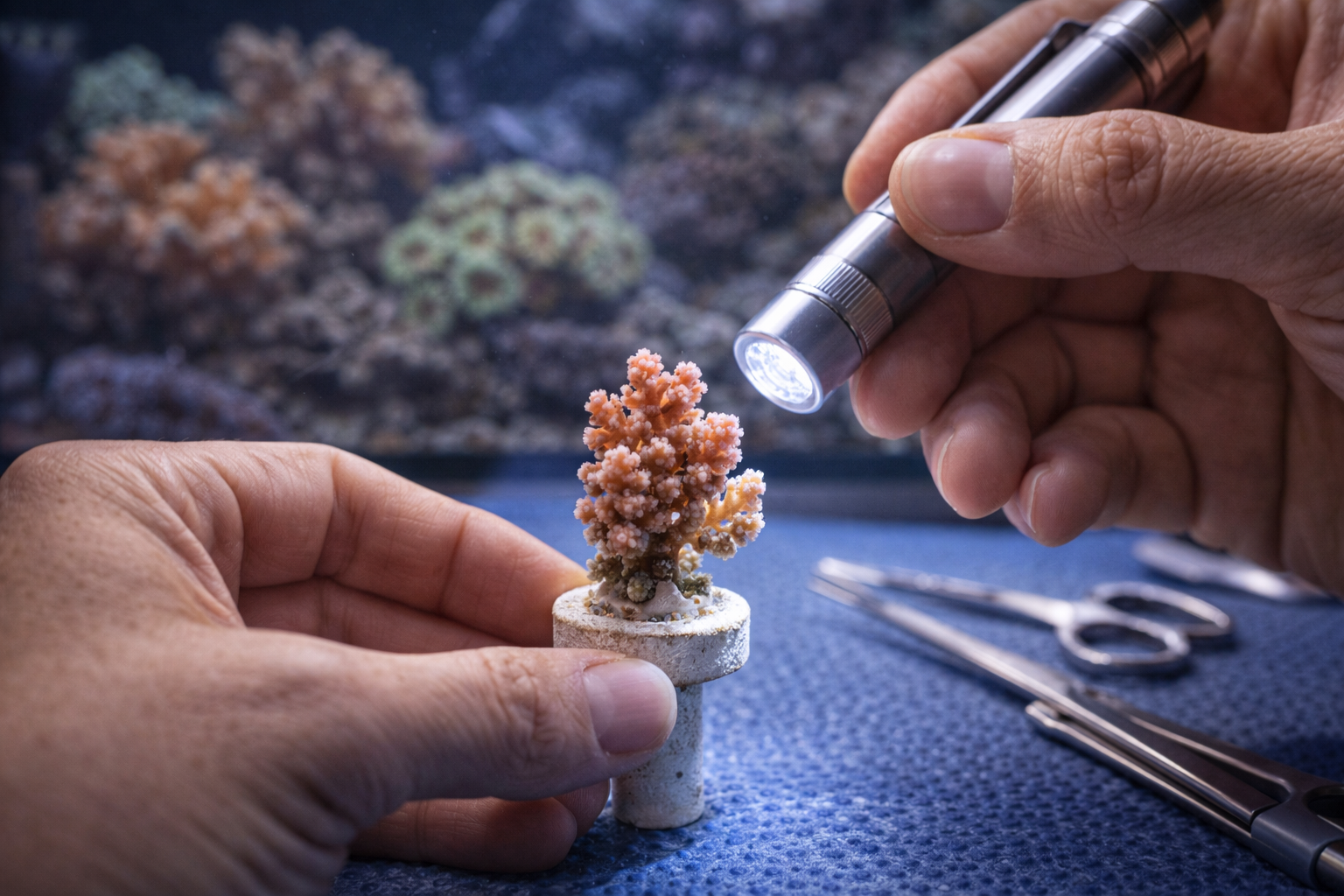
Every new addition deserves a close look.
That means checking:
- frag plugs
- coral bases
- undersides of branches or plates
- small crevices in rock rubble
- shaded folds where tiny Aiptasia may be hiding
Beginners often focus only on the coral itself. Experienced hobbyists know the danger is often on the base, plug, or hidden edge.
Using a flashlight and a few extra minutes before placing anything in the display tank can save weeks or months of cleanup later.
Frag Plugs: Small Bases, Big Problems
Frag plugs are one of the most common ways pests enter a reef tank.
They may look clean from the top while hiding nuisance algae, vermetids, or tiny Aiptasia around the base or stem.
Many reef keepers now treat frag plugs with healthy suspicion.
Long-term prevention may include:
- closely inspecting every plug
- trimming coral away from suspect bases
- remounting coral if necessary
- avoiding blind trust just because a frag came from a nice system
This is not paranoia. It is pattern recognition.
Aiptasia does not care whether it entered on an expensive coral or a bargain frag. If it gets in, it can spread either way.
Quarantine Makes Prevention Easier
Not every hobbyist wants a full quarantine setup for corals and inverts, but even a simple observation system can dramatically reduce risk.
A quarantine or holding setup allows you to:
- inspect new arrivals under better visibility
- monitor for hidden Aiptasia over time
- treat pests before they reach the display tank
- avoid rushed decisions during acclimation
For experienced reef keepers with valuable displays, this is often one of the smartest long-term moves.
For beginners, even a smaller temporary holding system can help slow the pace and make better decisions possible.
Why “I Didn’t See Anything” Is Not Always Enough
This is one of the hardest lessons in reef keeping.
Sometimes a new coral looks perfectly clean.
And still, something slips through.
Aiptasia can be tiny when first introduced. It may stay hidden for days or weeks before extending enough to be noticed. That is why prevention is not just a one-time inspection. It is an inspection habit.
A good prevention mindset includes:
- checking new additions before placement
- checking the same areas again days later
- watching suspicious plugs or rocks closely
- reacting early when something questionable appears
Catching one tiny Aiptasia early is infinitely easier than battling a mature infestation later.
Use Livestock as Ongoing Insurance
Biological control is not only for outbreaks. In some reef systems, it also acts as a form of ongoing insurance.
Peppermint shrimp, in particular, can serve as a patrol force in tanks where they are compatible. They may help consume very small or newly emerging Aiptasia before the aquarist even notices them.
That does not mean livestock replaces prevention practices. It means livestock can support them.
Think of it this way:
- inspection prevents many introductions
- direct treatment handles visible pests
- livestock may help suppress the ones you do not see right away
That layered approach is what creates durable relief.
Keep a Watch List in Your Tank
Experienced reef keepers often know exactly where to look first.
Most tanks develop a few repeat-risk zones, such as:
- shaded ledges
- overflow edges
- frag racks
- lower rock crevices
- around recently added coral bases
A beginner may scan the tank generally and miss details. A seasoned aquarist often builds a mental map of high-risk areas and checks them routinely.
This habit pays off.
Aiptasia is much easier to handle when it is just reappearing in one known area than when it has had a month to spread unnoticed behind the scape.
Do Not Let Small Sightings Slide
It is amazingly common for a reefer to think:
“I’ll deal with that one later.”
That is often the beginning of a bigger headache.
Aiptasia does not need much time to become a more serious issue. A single visible pest can become several. Several can become dozens.
The tanks that stay cleaner long term are usually managed by people who respond quickly to small signs.
Not frantically. Just consistently.
That consistency matters more than brute force.
Stable Reef Systems Still Need Vigilance
Good water quality, stable alkalinity, and strong husbandry do not directly “cause” or “prevent” Aiptasia in the same way they affect coral health.
But a well-managed system does make prevention easier.
Why?
Because when the tank is stable and the hobbyist is attentive, unusual pests stand out sooner. The reefer notices changes earlier. Corals are not already stressed and competing with multiple other problems.
In other words, better overall reef management gives you more clarity and more control.
That does not mean Aiptasia only appears in neglected tanks. It absolutely can show up in beautiful, advanced systems. But in disciplined systems, it usually does not get away with much for very long.
Create an Aiptasia Response Routine
The easiest way to prevent small problems from becoming large ones is to remove decision fatigue.
Have a routine.
When you see suspicious growth:
- inspect closely
- confirm whether it is Aiptasia
- decide whether to treat directly or monitor briefly
- check the surrounding area for others
- revisit that location during the next tank inspection
This sounds simple because it is.
But simple systems are what keep reef keeping manageable.
Aiptasia wins when hobbyists hesitate, forget, or assume they will remember later.
Prevention for Beginners vs. Experienced Reef Keepers
Beginners
For newer aquarists, the biggest win is learning to slow down. Do not assume every coral can go straight into the display without scrutiny. Learn what Aiptasia looks like at different sizes. Get comfortable inspecting plugs, bases, and small rock surfaces.
Experienced hobbyists
For advanced aquarists, prevention is often about tightening process. That may mean more disciplined quarantine, faster treatment decisions, or adding layered controls when bringing in livestock and frags more frequently.
The level is different, but the principle is the same: early attention beats late reaction.
Why J&L Customers Benefit from a Multi-Tool Approach
One of the biggest advantages hobbyists have today is access to more than one proven form of Aiptasia relief.
Instead of relying on guesswork, reef keepers can build a plan using:
- livestock relief for natural control
- targeted products for visible outbreaks
- prevention habits to stop reintroduction
That is the real takeaway from this series.
There is no single perfect solution for every tank. But there is a smart strategy for nearly every tank.
And usually, that strategy is not either-or. It is a combination.
Final Thoughts
Aiptasia prevention is not glamorous.
There is no dramatic reveal. No miracle cure feeling. No one posts proud photos of “a frag plug I carefully inspected and rejected.”
But that quiet discipline is what protects thriving reef systems over the long run.
The hobbyists who stay ahead of Aiptasia are not always the most aggressive. They are usually the most observant.
They inspect before introducing. They act early. They use the right tools. They check back. They do not assume yesterday’s solution guarantees tomorrow’s result.
That is how long-term Aiptasia relief really works.
Not as a one-time event, but as a reef-keeping mindset.


