

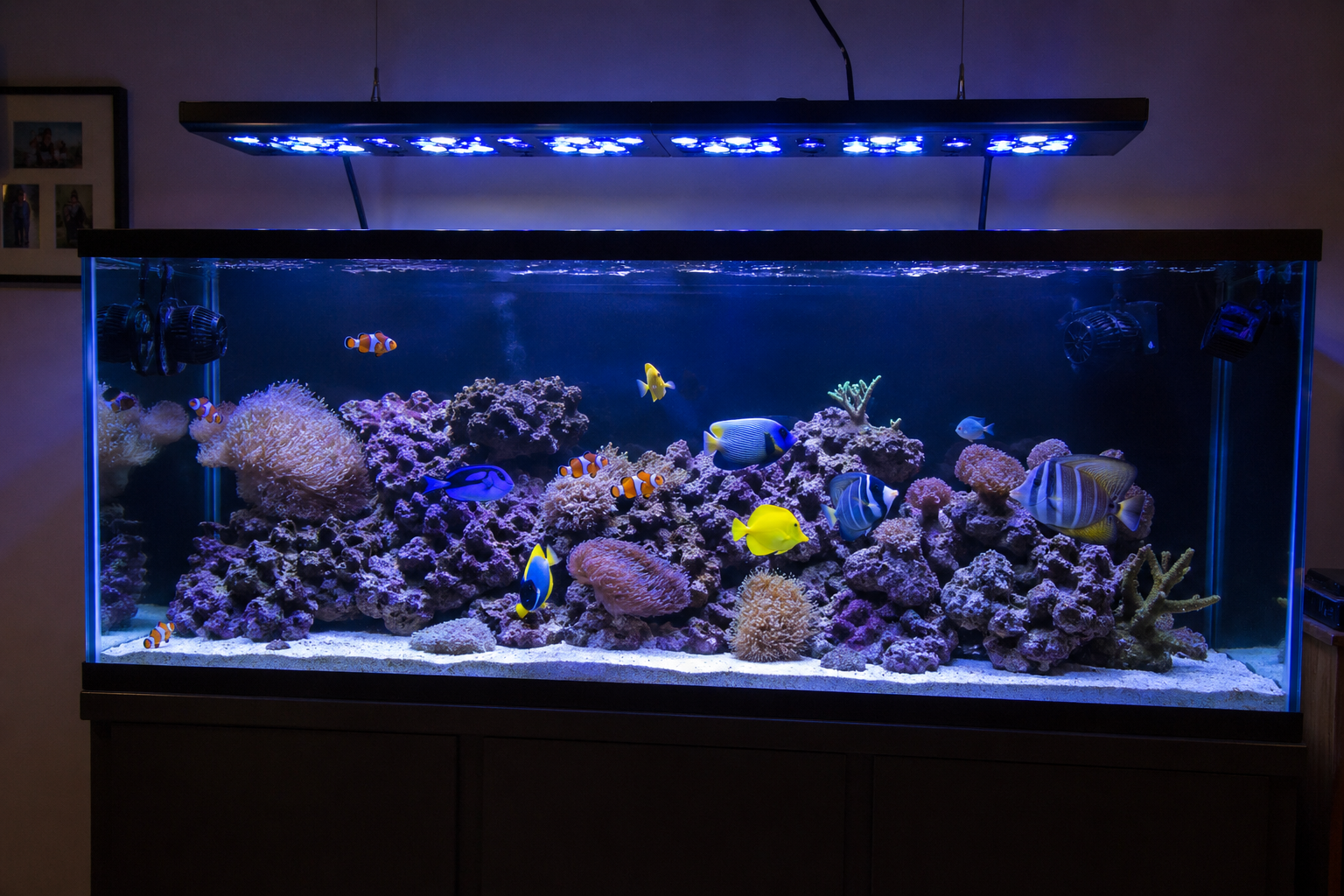
A fish-only saltwater aquarium is one of the most enjoyable and approachable ways to keep marine fish. Compared to a reef aquarium, a fish-only setup gives you more flexibility because you are not trying to maintain sensitive corals, clams, or other invertebrates. That does not mean water quality is less important. Fish still rely on stable, clean, well-oxygenated water, and the most successful aquariums are built on consistent parameters rather than constant corrections.
For beginners, learning aquarium parameters can feel overwhelming at first. Temperature, salinity, pH, ammonia, nitrite, nitrate, phosphate, alkalinity, and filtration all matter in different ways. For advanced aquarists, the challenge is usually not knowing the numbers—it is keeping them steady over time, especially as fish grow, feeding increases, and the biological load of the aquarium changes.
This guide focuses on fish-only saltwater aquariums, including fish-only with live rock systems, often called FOWLR tanks. These systems can be simple, beautiful, and very stable when set up correctly.
Ideal Parameters for a Fish-Only Saltwater Aquarium
| Parameter | Recommended Range |
|---|---|
| Temperature | 76–80°F / 24–27°C |
| Salinity | 1.020–1.025 specific gravity |
| pH | 8.0–8.4 |
| Ammonia | 0 ppm |
| Nitrite | 0 ppm |
| Nitrate | Ideally under 20 ppm, acceptable under 40 ppm for many fish-only systems |
| Phosphate | Ideally under 0.25 ppm |
Temperature: Keep It Stable
Most marine fish do well between 76 and 80°F. More important than the exact number is consistency. A tank that swings from 75°F in the morning to 81°F by evening can stress fish even if both numbers are technically within a survivable range.
A reliable aquarium heater is essential. For larger aquariums, many aquarists prefer using two smaller heaters instead of one oversized heater. This gives some backup if one fails and reduces the risk of one heater overheating the system. A separate thermometer or temperature controller adds another layer of safety.
Products that help maintain temperature include quality heaters, digital thermometers, temperature controllers, cooling fans, and aquarium chillers for systems that run warm.
Salinity: Accuracy Matters
Fish-only saltwater systems are often kept slightly lower in salinity than reef aquariums. A range of 1.020 to 1.025 specific gravity is common. Many aquarists keep fish-only tanks around 1.023 to 1.025 for stability and to stay close to natural seawater conditions.
The most important tool here is a refractometer or reliable digital salinity tester. Swing-arm hydrometers are inexpensive, but they can become inaccurate due to salt buildup, bubbles, and wear over time.
To maintain salinity, top off evaporated water with fresh RO/DI water, not saltwater. When water evaporates, salt stays behind. Adding saltwater as top-off will gradually raise salinity. An automatic top-off system is one of the best upgrades for keeping salinity stable.
pH: Do Not Chase It Too Aggressively
Saltwater fish generally prefer a pH between 8.0 and 8.4. A slightly lower pH is not always a crisis if the aquarium is stable, oxygenated, and otherwise healthy. Many pH issues are caused by poor gas exchange, high indoor carbon dioxide, low alkalinity, or excess organic waste.
Instead of constantly adding pH buffer, focus on the basics: good surface agitation, strong filtration, proper alkalinity, regular water changes, and avoiding overstocking. If pH is consistently low, increasing aeration or improving room ventilation may help.
Ammonia and Nitrite: Always Zero
Ammonia and nitrite should always read zero in an established aquarium. These are the most dangerous parameters in a fish-only system. Ammonia is produced from fish waste, uneaten food, and decaying organic material. Beneficial bacteria convert ammonia into nitrite, and then nitrite into nitrate.
If ammonia or nitrite is present, the biological filter is not keeping up. This can happen in new tanks, overstocked tanks, tanks that have been overcleaned, or systems where too many fish were added too quickly.
Products that help include bacteria starters, biological media, live rock, ammonia alert badges, and reliable test kits. In emergencies, water changes and ammonia detoxifiers can help protect fish while the biological filter recovers.
Nitrate: Manage the Long-Term Waste Load
Nitrate is less toxic than ammonia or nitrite, but it still matters. In fish-only aquariums, nitrate is often tolerated at higher levels than in reef tanks. Many hardy marine fish can live with nitrate under 40 ppm, but lower is generally better. A practical goal is under 20 ppm when possible.
High nitrate can contribute to algae growth, dull water clarity, reduced fish vitality, and long-term stress. The main causes are heavy feeding, overstocking, dirty filter media, insufficient water changes, and weak biological export.
To control nitrate, use regular water changes, a quality protein skimmer, good mechanical filtration, biological media, live rock, and careful feeding. Advanced aquarists may also use refugiums, denitrifying media, carbon dosing, or automatic water change systems.
Phosphate: Prevent Algae Before It Takes Over
Fish-only systems can handle more phosphate than reef tanks, but phosphate still needs attention. Elevated phosphate often leads to nuisance algae, cloudy glass, and dirty-looking rockwork.
Phosphate usually enters the aquarium through fish food, source water, and decaying organic waste. Using RO/DI water for mixing saltwater and top-off water is one of the best ways to prevent phosphate problems from the start.
Products that help manage phosphate include phosphate test kits, granular ferric oxide media, phosphate-removing pads, protein skimmers, and high-quality RO/DI filtration systems.
Filtration: The Heart of a Fish-Only Aquarium
Fish-only aquariums often carry a heavier nutrient load than reef tanks because larger fish and predator fish can produce a lot of waste. Strong filtration is essential.
A good filtration plan includes three parts: mechanical filtration, biological filtration, and chemical filtration.
Mechanical Filtration
Mechanical filtration removes particles from the water before they break down. Filter socks, filter floss, roller mats, sponges, and canister filters all perform this job. The key is maintenance. Dirty mechanical media can quickly become a nutrient source if it is not cleaned or replaced regularly.
Biological Filtration
Biological filtration is where beneficial bacteria live. Live rock, ceramic media, bio blocks, and porous filter media provide surface area for bacteria to process ammonia and nitrite. This is the foundation of a stable aquarium.
Chemical Filtration
Chemical filtration helps polish the water and remove dissolved contaminants. Activated carbon is useful for water clarity, odour control, and removing some organic compounds. Phosphate removers can help reduce algae pressure. Specialty resins may be useful in specific situations.
Protein Skimmers: Highly Recommended
A protein skimmer is one of the best pieces of equipment for a saltwater fish-only tank. It removes dissolved organic waste before it breaks down into nitrate and phosphate. It also improves oxygenation, which benefits fish health.
For heavily stocked tanks or systems with messy eaters, choose a skimmer rated above the actual aquarium volume. A lightly stocked 75-gallon fish-only tank may do well with a skimmer rated for 75 to 100 gallons, while a heavily stocked system may benefit from a skimmer rated much higher.
Water Changes: Simple and Effective
Regular water changes remain one of the most reliable ways to maintain a fish-only aquarium. For most systems, a 10–20% water change every two to four weeks is a good starting point. Heavily stocked tanks may need more frequent changes.
Always match temperature and salinity before adding new saltwater. Sudden changes can stress fish. Use a quality marine salt mix, RO/DI water, a mixing pump, and a heater to prepare water properly.
Testing Schedule for Beginners
New aquariums should be tested frequently while cycling. During the first several weeks, test ammonia, nitrite, nitrate, salinity, and temperature regularly. Once the tank is stable, weekly testing is usually enough for most fish-only systems.
A beginner testing kit should include ammonia, nitrite, nitrate, pH, and salinity measurement tools. More advanced aquarists may also test phosphate and alkalinity.
Advanced Monitoring and Automation
Advanced aquarists often add automation to reduce risk and improve consistency. Aquarium controllers can monitor temperature, pH, water level, and equipment status. Automatic top-off systems keep salinity stable. Dosing pumps can be used for specialized additives. Automatic feeders can help maintain consistent feeding when used carefully.
Automation is not a replacement for observation. The best aquarists still watch their fish daily. Behaviour changes, heavy breathing, hiding, aggression, or appetite loss often reveal problems before a test kit does.
Stocking and Feeding Matter
Even perfect equipment cannot overcome poor stocking choices. Add fish slowly and research adult size, aggression level, diet, and compatibility. Many fish sold small can grow large and produce significant waste.
Feed high-quality frozen, pellet, flake, and specialty foods based on the species you keep. Feed enough for health, but avoid excess food drifting into the rockwork or filtration. Uneaten food quickly becomes ammonia, nitrate, and phosphate.
Essential Product Checklist
- Marine salt mix
- RO/DI water system or purified source water
- Refractometer or digital salinity tester
- Reliable heater and thermometer
- Protein skimmer
- Filter socks, floss, roller mat, or mechanical filtration
- Live rock or biological media
- Activated carbon
- Phosphate remover if needed
- Ammonia, nitrite, nitrate, pH, and phosphate test kits
- Bacteria supplement for new setups or after major changes
- Automatic top-off system for better salinity stability
Final Thoughts
A fish-only saltwater aquarium does not need to be complicated, but it does need consistency. The goal is not to chase perfect numbers every day. The goal is to create a stable environment where fish can eat well, breathe easily, behave naturally, and remain healthy over time.
For beginners, focus on the fundamentals: stable temperature, accurate salinity, zero ammonia, zero nitrite, controlled nitrate, and regular maintenance. For advanced aquarists, focus on refinement: stronger nutrient export, automation, better testing, and long-term stability.
With the right products, steady habits, and a clear understanding of water parameters, a fish-only aquarium can be one of the most rewarding and reliable saltwater systems to maintain.


