

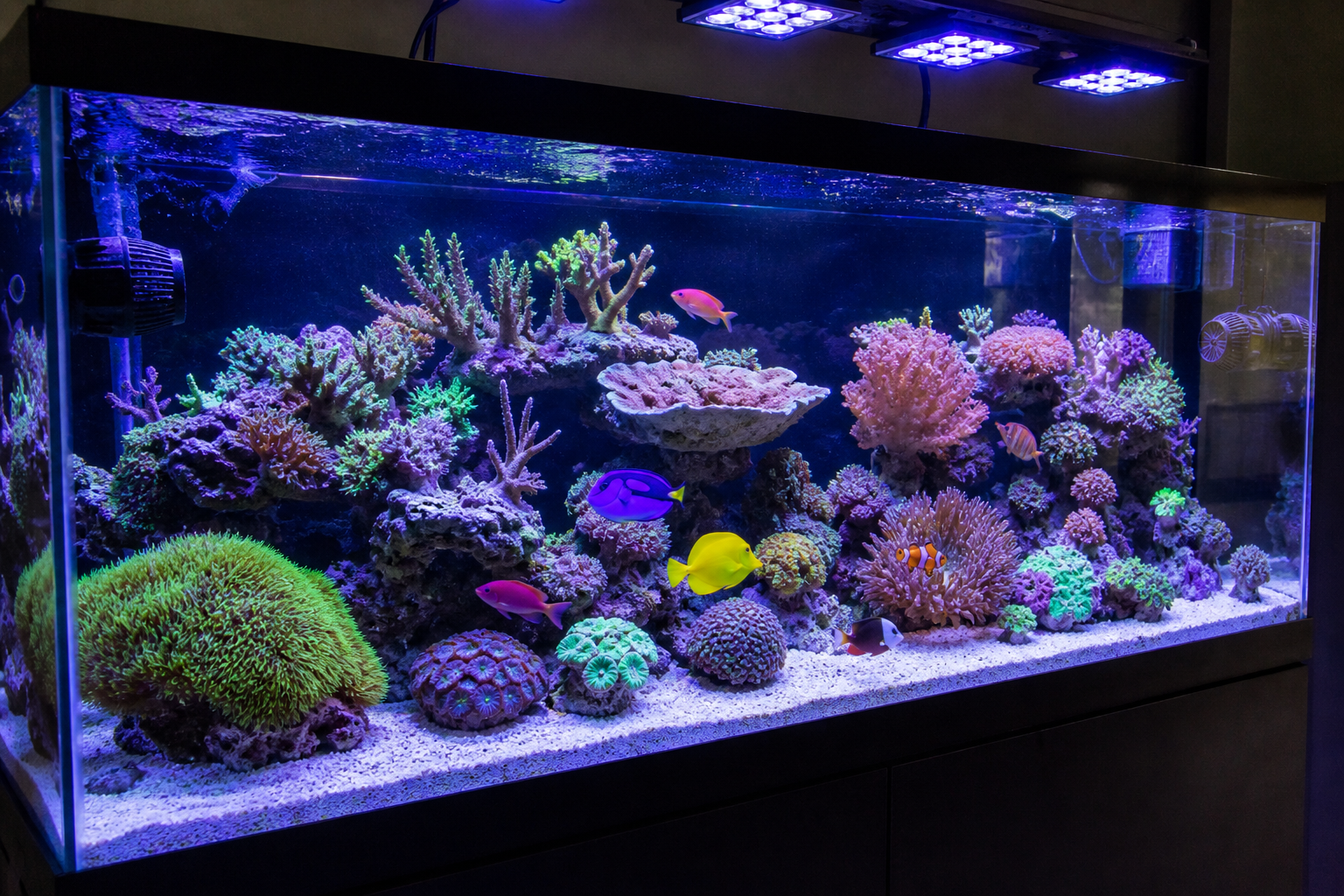
A mixed reef aquarium is where the hobby truly comes to life. You are no longer just keeping fish—you are building a living ecosystem that includes fish, corals, and beneficial microorganisms all interacting together. The reward is a vibrant, constantly changing environment. The challenge is balance.
Unlike fish-only systems, reef aquariums require tighter control of water chemistry. Corals are sensitive to changes in alkalinity, calcium, nutrients, and overall stability. At the same time, fish still produce waste that affects the system. A mixed reef tank is about finding the middle ground where both thrive.
Whether you are just transitioning from a fish-only setup or refining an established reef, understanding your parameters is the key to long-term success.
Core Parameters for a Mixed Reef Tank
| Parameter | Recommended Range |
|---|---|
| Temperature | 77–79°F (25–26°C) |
| Salinity | 1.025 specific gravity |
| pH | 8.1–8.4 |
| Alkalinity | 8–10 dKH |
| Calcium | 400–450 ppm |
| Magnesium | 1250–1350 ppm |
| Nitrate | 5–15 ppm |
| Phosphate | 0.03–0.1 ppm |
Why Stability Matters More Than Perfection
One of the biggest mistakes both beginners and experienced aquarists make is chasing perfect numbers. In a mixed reef tank, stability is far more important than hitting an exact value.
For example, an alkalinity that stays consistently at 8.2 dKH is far better than one that swings between 7.5 and 9.5. Corals react poorly to fluctuations, even if the numbers technically fall within acceptable ranges.
Your goal is consistency. That means testing regularly, making small adjustments, and avoiding sudden changes.
Alkalinity: The Backbone of Coral Health
Alkalinity is one of the most critical parameters in a reef tank. It supports coral growth by providing the building blocks needed for skeleton formation. It also plays a role in stabilizing pH.
In a mixed reef tank, alkalinity between 8 and 10 dKH works well for most systems. Soft corals and LPS are generally more forgiving than SPS, but they still benefit from stable alkalinity.
As corals grow, they consume alkalinity. This is why many aquariums eventually require dosing. If alkalinity begins to drop between water changes, it is a sign that your system is consuming more than it is receiving.
Calcium and Magnesium: Supporting Growth and Balance
Calcium and magnesium work together with alkalinity. Calcium is directly used by corals to build their skeletons, while magnesium helps prevent calcium and alkalinity from precipitating out of the water.
A good target range is 400–450 ppm for calcium and 1250–1350 ppm for magnesium. Keeping these levels stable ensures that corals can grow without stress.
In many systems, calcium and alkalinity are dosed together using a two-part system. Magnesium is adjusted less frequently but should still be tested regularly.
Nutrients: Finding the Sweet Spot
Unlike older reef-keeping philosophies that aimed for ultra-low nutrients, modern reefing recognizes that corals need some nutrients to thrive. A completely stripped tank can lead to pale corals and slow growth.
Nitrate between 5 and 15 ppm and phosphate between 0.03 and 0.1 ppm is a healthy range for most mixed reef tanks. These levels support coral coloration and biological stability while still preventing nuisance algae from taking over.
If nutrients are too high, algae can become a problem. If they are too low, corals may lose color and vitality. Balance is key.
Lighting: Fuel for Coral Growth
Lighting plays a major role in a mixed reef aquarium. Corals rely on light for photosynthesis through symbiotic algae called zooxanthellae.
Modern LED systems allow precise control over intensity and spectrum. A balanced blue-white spectrum is commonly used, with stronger blue channels enhancing coral fluorescence.
Too much light can bleach corals, while too little can limit growth. Start conservatively and increase intensity gradually.
Flow: Bringing the Tank to Life
Water movement is often overlooked but is essential in a reef system. Flow delivers nutrients to corals, removes waste, and prevents detritus from settling.
A mixed reef tank benefits from varied, random flow rather than a constant direct stream. Powerheads placed strategically can create this effect.
Soft corals prefer gentler flow, while LPS benefit from moderate movement. The goal is to create enough motion without blasting corals directly.
Filtration and Nutrient Export
Maintaining a mixed reef tank requires strong filtration. This includes removing waste before it breaks down and managing nutrients over time.
A protein skimmer is one of the most valuable tools in a reef system. It removes organic waste and improves oxygenation. Mechanical filtration like filter socks or roller mats captures debris, while chemical filtration like carbon helps maintain water clarity.
Advanced systems may include refugiums, media reactors, or automated filtration systems to further stabilize the tank.
Dosing: Maintaining What Corals Consume
As your reef matures, water changes alone may not keep up with consumption. This is where dosing becomes important.
Two-part dosing systems provide alkalinity and calcium. All-in-one solutions are also available for simpler setups. Automated dosing pumps allow precise and consistent delivery, reducing the risk of swings.
For advanced aquarists, automated testing systems can monitor parameters and adjust dosing accordingly.
Testing: The Key to Control
Regular testing is what separates stable reef tanks from struggling ones. At a minimum, you should test alkalinity weekly and calcium, magnesium, nitrate, and phosphate regularly.
High-quality test kits or digital testers improve accuracy and make it easier to track trends over time.
Beginner Approach
If you are new to reef keeping, start simple. Focus on stable salinity, temperature, and alkalinity. Choose hardy soft corals and LPS, avoid overstocking, and perform regular water changes.
Do not rush into complex dosing systems. Let the tank mature and learn how it behaves before adding more variables.
Advanced Optimization
Experienced aquarists often focus on fine-tuning. This includes optimizing nutrient levels, dialing in lighting schedules, adjusting flow patterns, and automating testing and dosing.
At this stage, small improvements can lead to significant gains in coral growth, color, and overall system stability.
Essential Product Checklist
- High-quality reef lighting system
- Protein skimmer
- Refractometer or digital salinity tester
- Test kits (alkalinity, calcium, magnesium, nitrate, phosphate)
- Two-part dosing solution or all-in-one reef supplement
- Dosing pump (optional but recommended)
- Powerheads for flow
- Filter socks or roller mat
- Activated carbon
- Phosphate remover if needed
- RO/DI water system
- Reef salt mix
Final Thoughts
A mixed reef aquarium is about balance, patience, and consistency. There is no single perfect number that guarantees success. Instead, success comes from maintaining stable conditions that allow both fish and corals to adapt and thrive.
For beginners, keep things simple and stable. For advanced aquarists, focus on refinement and consistency. Over time, your tank will become more predictable, more stable, and more rewarding.
When parameters are steady and the system is well-maintained, a mixed reef aquarium becomes one of the most visually stunning and satisfying systems you can keep.


