

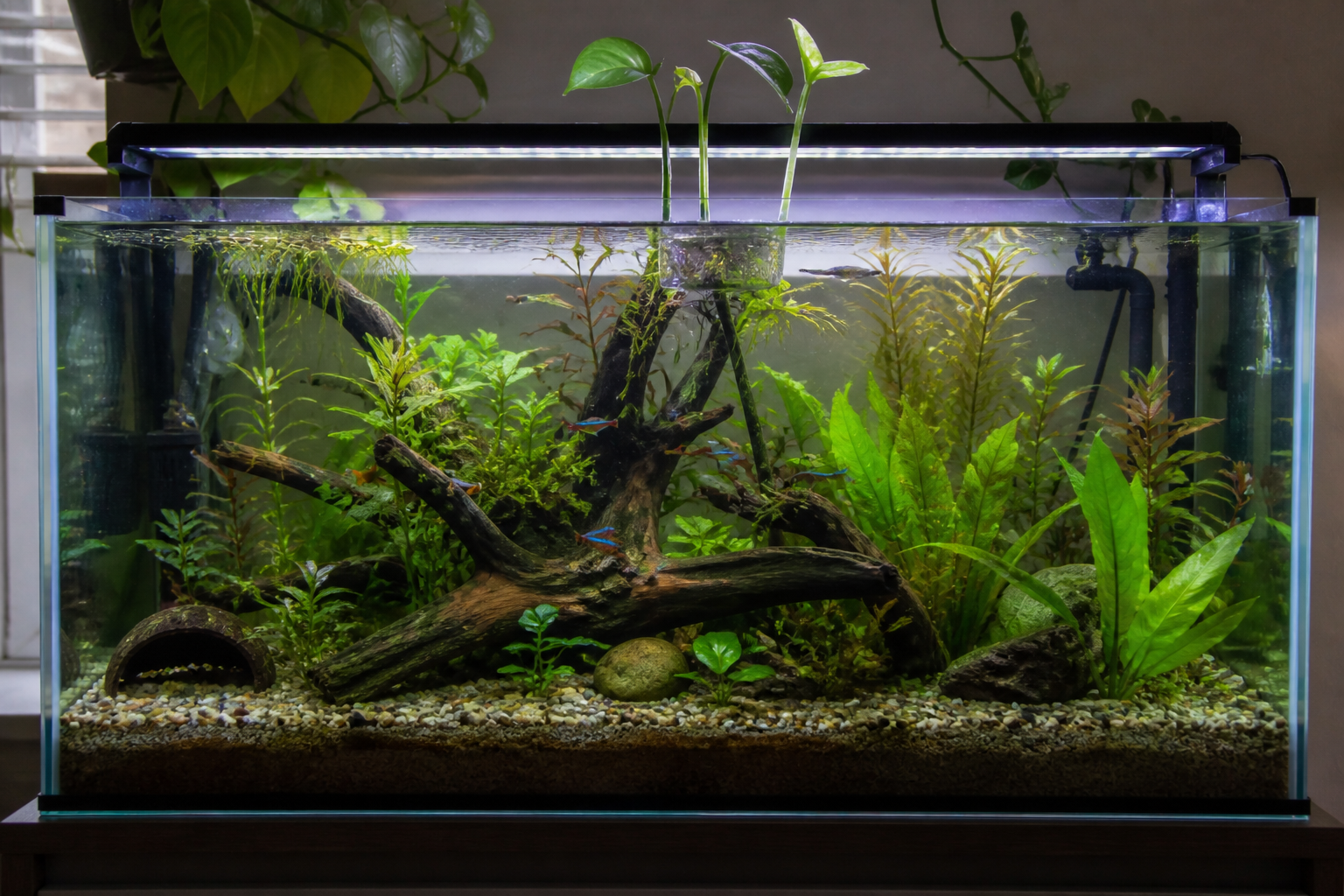
Freshwater aquariums are often where the journey into fishkeeping begins. They are accessible, versatile, and capable of supporting a wide variety of fish, plants, and aquascapes. But whether you are setting up your first tank or refining an established system, one thing remains constant: water quality determines everything.
Fish live in their environment. Every breath they take, every movement they make, and every biological function depends on the water around them. That is why understanding and maintaining proper parameters is the foundation of a successful freshwater aquarium.
This guide breaks down the key parameters, explains why they matter, and outlines the products and practices that help maintain a stable and thriving system.
Core Freshwater Parameters
| Parameter | Recommended Range |
|---|---|
| Temperature | 72–78°F (22–26°C) |
| pH | 6.5–7.5 (species dependent) |
| Ammonia | 0 ppm |
| Nitrite | 0 ppm |
| Nitrate | Under 40 ppm (ideally under 20) |
Temperature: Stability Over Precision
Most freshwater fish thrive in temperatures between 72 and 78°F, but the exact range depends on the species you keep. Tropical fish like tetras, guppies, and angelfish prefer warmer water, while some species can tolerate slightly cooler conditions.
What matters most is stability. Rapid temperature swings can stress fish, weaken immune systems, and increase the risk of disease.
A reliable aquarium heater is essential for maintaining a consistent environment. For larger tanks, using two smaller heaters instead of one large one provides added safety and redundancy. Pairing your heater with a thermometer ensures you can monitor changes accurately.
pH: Matching Your Fish, Not Chasing Numbers
pH measures how acidic or alkaline your water is. While many freshwater fish can adapt to a range of pH levels, sudden changes can be harmful.
Most community fish do well between 6.5 and 7.5. However, some species prefer slightly more acidic or alkaline conditions. The key is to match your fish selection to your natural water conditions rather than constantly trying to adjust pH.
If adjustments are necessary, they should be made slowly. Natural methods such as driftwood, substrate choice, and water source adjustments are generally more stable than chemical buffers.
The Nitrogen Cycle: The Most Important Concept
Understanding the nitrogen cycle is essential for any freshwater aquarium. Fish produce waste, uneaten food breaks down, and organic material decays—all of which produce ammonia.
Ammonia is highly toxic to fish. Beneficial bacteria convert ammonia into nitrite, which is also toxic. Another group of bacteria then converts nitrite into nitrate, which is less harmful and can be managed through maintenance.
This biological process is what keeps your aquarium safe. Without it, fish cannot survive.
Ammonia and Nitrite: Always Zero
In a healthy, established aquarium, ammonia and nitrite should always be zero. Any detectable level indicates a problem with the biological filter.
This is most common in new tanks that have not fully cycled, tanks that have been overstocked, or systems where beneficial bacteria have been disrupted.
To maintain proper levels, avoid overfeeding, introduce fish gradually, and ensure your filtration system supports a strong bacterial population.
Nitrate: Managing Long-Term Stability
Nitrate is the end product of the nitrogen cycle. While it is far less toxic than ammonia or nitrite, high nitrate levels can still stress fish and contribute to algae growth.
A good target is under 20 ppm, though many freshwater systems can tolerate up to 40 ppm without immediate harm.
Nitrate is controlled primarily through water changes. Regular partial water changes remove accumulated nitrate and refresh the system. Live plants can also help absorb nitrate naturally.
Filtration: The Core of Every Freshwater Tank
Filtration is what keeps your aquarium stable. A good filter performs three key functions: mechanical filtration, biological filtration, and chemical filtration.
Mechanical Filtration
This removes visible debris such as uneaten food and waste. Filter pads, sponges, and floss trap particles before they break down.
Biological Filtration
This is where beneficial bacteria live. Bio media, sponge filters, and even gravel surfaces provide space for bacteria to process ammonia and nitrite.
Chemical Filtration
Activated carbon and specialty media can remove impurities, odours, and discoloration from the water.
Most freshwater aquariums use hang-on-back filters, sponge filters, or canister filters depending on tank size and stocking levels.
Essential Products for Freshwater Stability
Maintaining proper parameters becomes much easier with the right equipment and products.
- Water conditioner to remove chlorine and chloramine
- Reliable heater and thermometer
- Quality filtration system
- Test kits for ammonia, nitrite, nitrate, and pH
- Bacteria supplements for new tanks or after maintenance
- Gravel vacuum for cleaning substrate
- RO/DI water system (optional for advanced setups)
Water Changes: Simple but Critical
Water changes are one of the most effective ways to maintain a freshwater aquarium. Removing 20–30% of the water every one to two weeks helps control nitrate, replenish minerals, and keep the system stable.
Always treat new water with a conditioner and match the temperature before adding it to the tank. Sudden changes can stress fish.
Beginner Approach
For beginners, simplicity is key. Focus on cycling your tank properly before adding fish. Stock slowly, feed lightly, and test your water regularly.
Choose hardy fish species and avoid overcrowding. A stable, lightly stocked tank is far easier to maintain than a heavily stocked one.
Advanced Optimization
More experienced aquarists often refine their systems by improving filtration, increasing plant mass, and optimizing feeding and maintenance routines.
Advanced setups may include automated water change systems, high-end canister filters, or specialized media to fine-tune water quality.
Common Mistakes to Avoid
- Overfeeding fish
- Adding too many fish too quickly
- Not cycling the tank properly
- Neglecting regular water changes
- Cleaning filter media too aggressively
Final Thoughts
A successful freshwater aquarium is not about chasing perfect numbers. It is about maintaining a stable environment where fish can thrive.
For beginners, focus on the fundamentals—clean water, stable temperature, and proper filtration. For advanced aquarists, refinement comes from consistency and attention to detail.
With the right approach and the right tools, a freshwater aquarium can be one of the most rewarding and reliable systems in the hobby.


