

Nature’s Solution: Using Livestock to Eliminate Aiptasia
When reef aquarists first discover Aiptasia in their aquarium, the immediate reaction is often to reach for a chemical treatment or injection solution.
But in many reef systems, the most elegant and natural solution is actually biological control.
Certain marine animals have evolved to feed on Aiptasia, making them valuable allies in the ongoing battle against this persistent pest.
For reef keepers looking for a low-maintenance and natural form of Aiptasia relief, introducing the right livestock can sometimes solve the problem entirely.
However, like any reef-keeping strategy, success depends on understanding how these animals behave, when they work best, and what conditions they require.
Why Biological Control Works
In the wild, Aiptasia rarely grows out of control because natural predators keep their populations in balance.
In aquariums, those predators are usually absent.
This allows Aiptasia to multiply rapidly.
By introducing animals that naturally prey on Aiptasia, aquarists can restore this natural balance inside their reef system.
The result can be:
- Gradual reduction of Aiptasia populations
- Natural control without constant intervention
- Long-term stability once the infestation is removed
Two livestock options have become especially popular among reef keepers seeking Aiptasia relief.
These are:
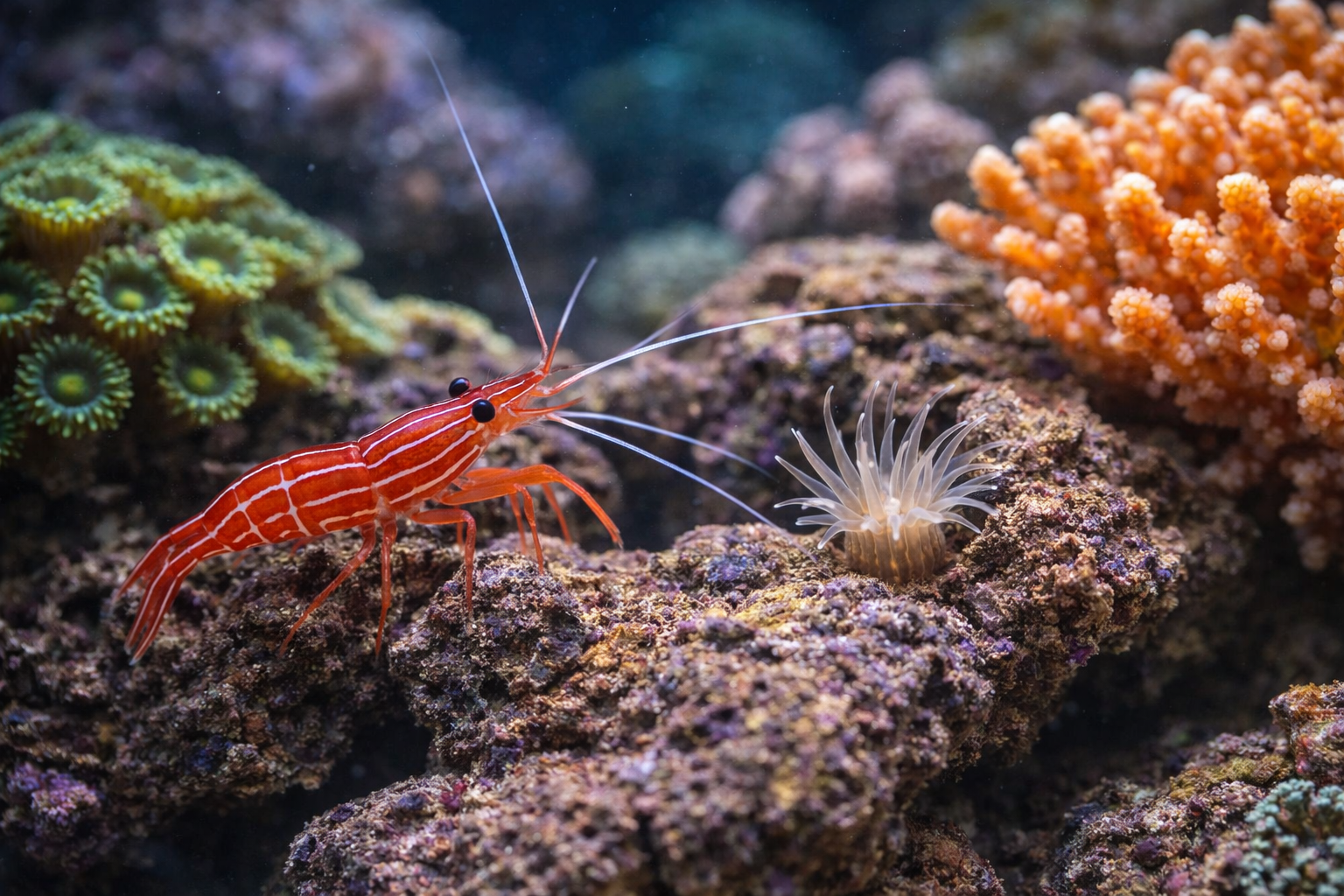
Peppermint Shrimp
Berghia Nudibranchs
Both can be extremely effective when used correctly.
Peppermint Shrimp: The Classic Aiptasia Hunter
Among reef keepers, peppermint shrimp are often the first livestock solution attempted for Aiptasia problems.
These small shrimp are widely available, reef compatible, and relatively easy to care for.
But their effectiveness depends heavily on selecting the correct species and understanding their behavior.
Why Peppermint Shrimp Eat Aiptasia
Peppermint shrimp naturally feed on small anemones and organic material found among reef structures.
In aquariums, this includes:
- Small Aiptasia
- Newly formed Aiptasia colonies
- Soft organic growth around rockwork
They often work best when the infestation is still in the early stages.
Ideal Tank Conditions
Peppermint shrimp thrive in most reef environments.
Typical requirements include:
- Stable salinity (1.025)
- Temperatures between 24–26°C
- Plenty of rock structure for hiding
- Moderate reef flow
Because they are nocturnal, they often hunt Aiptasia during the night, which means aquarists may not immediately see them working.
Benefits of Peppermint Shrimp
Peppermint shrimp offer several advantages.
Reef Safe
They are generally safe around corals and fish.
Affordable
Compared to many reef livestock options, peppermint shrimp are accessible to most hobbyists.
Continuous Control
Even after eliminating Aiptasia, they continue to patrol the rockwork looking for new pests.
Limitations of Peppermint Shrimp
Despite their popularity, peppermint shrimp are not always a perfect solution.
Some challenges include:
- Not all peppermint shrimp species eat Aiptasia
- Larger Aiptasia may be ignored
- Heavy feeding of fish can reduce their interest in pests
Because of these factors, peppermint shrimp work best when:
- The infestation is small
- The tank is not heavily fed
- Several shrimp are introduced together
Berghia Nudibranchs: The Aiptasia Specialists
While peppermint shrimp are opportunistic feeders, Berghia nudibranchs are true Aiptasia specialists.
These fascinating marine animals feed exclusively on Aiptasia.
Nothing else.
This makes them one of the most targeted and effective biological solutions available.
What Makes Berghia Unique
Berghia nudibranchs have evolved specifically to hunt Aiptasia.
They locate the anemones using chemical signals in the water and slowly consume them.
An incredible aspect of their biology is that they can actually incorporate Aiptasia’s stinging cells into their own bodies as a defense mechanism.
This adaptation allows them to hunt Aiptasia safely.
How Berghia Eliminate Infestations
Unlike peppermint shrimp, Berghia do not simply nibble at Aiptasia.
They systematically consume them.
A typical process looks like this:
- Berghia locate Aiptasia in rock crevices
- They consume the anemone entirely
- They lay eggs nearby
- The population grows as long as Aiptasia is available
Over time, the nudibranch population expands and begins eliminating Aiptasia across the entire aquarium.
Once the food source disappears, the Berghia population naturally declines.
When Berghia Work Best
Berghia nudibranchs are especially effective in certain situations.
Large Infestations
They excel when Aiptasia is widespread throughout rockwork.
Complex Aquascapes
They can reach deep crevices that aquarists cannot access.
Reef-Safe Environments
They do not harm corals, fish, or other invertebrates.
Challenges with Berghia
While Berghia are extremely effective, they require a bit more planning than peppermint shrimp.
Some considerations include:
- They are sensitive to predators
- Certain fish may eat them
- They require stable water conditions
Fish known to prey on Berghia include:
Wrasses
Certain dottybacks
Large shrimp species
For best results, Berghia are often introduced after lights out so they can settle safely.
Combining Biological and Direct Treatments
Many experienced reef keepers use a hybrid strategy.
This might include:
- Injecting large Aiptasia with treatment solutions
- Introducing peppermint shrimp or Berghia for ongoing control
This combination allows aquarists to eliminate large visible Aiptasia quickly while livestock prevents new ones from spreading.
Patience Is Important
One key difference between livestock control and chemical treatment is speed.
Biological control takes time.
Peppermint shrimp may take weeks to noticeably reduce Aiptasia numbers.
Berghia populations may take several months to fully eliminate an infestation.
However, once they succeed, the results can be long-lasting and natural.
Choosing the Right Livestock Strategy
The best biological approach depends on several factors:
- Tank size
- Fish population
- Infestation size
- Aquascape complexity
- Patience level
Many reef keepers start with peppermint shrimp and then move to Berghia if the infestation grows.
Others begin with Berghia immediately for a more targeted solution.
The Reef Keeper’s Advantage
The beauty of modern reef keeping is that aquarists now have multiple proven tools available.
Livestock solutions like peppermint shrimp and Berghia nudibranchs allow hobbyists to tackle Aiptasia in ways that mimic natural reef ecosystems.
Instead of constant manual removal, these animals quietly work behind the scenes restoring balance to the aquarium.
Coming Next in the Series
While biological control can be incredibly effective, sometimes reef keepers need a faster and more targeted solution.
In Part 3 of this series, we’ll explore:
The Most Effective Aiptasia Treatment Products
We’ll cover:
- How Aiptasia injection treatments work
- When to use them safely
- Techniques that prevent spreading the infestation
- How reef keepers combine treatments with livestock control
For aquarists dealing with stubborn outbreaks, these targeted methods can provide the rapid relief many reef tanks need.


