

Understanding Aiptasia and Why It Spreads
Few moments are more frustrating for reef aquarists than spotting the unmistakable shape of Aiptasia waving from a piece of live rock.
At first glance, it may not seem like a big deal. It is small. It is translucent. It may even look interesting if you have never dealt with it before. But experienced reef keepers know better. Aiptasia is one of the most persistent and frustrating pest anemones in the saltwater hobby, and once it gets established, it can spread surprisingly fast.
For beginners, Aiptasia often shows up as an unexpected nuisance. For advanced hobbyists, it is a warning sign that immediate action is usually the smart move. Either way, understanding what Aiptasia is, why it spreads, and how to respond early is the first step toward real Aiptasia relief.
What Is Aiptasia?
Aiptasia is a small pest anemone commonly introduced into reef aquariums as a hitchhiker. It often enters the tank on:
- Live rock
- Coral frags
- Frag plugs
- Macro algae
- Other transferred aquarium materials
Because it is hardy and adaptable, Aiptasia can survive transport and settle into a reef tank before the aquarist even notices it. One tiny specimen tucked into a shaded crevice may not seem urgent at first, but that is often how a larger infestation begins.
In a reef environment, Aiptasia benefits from the same things your corals do: stable water, available nutrients, strong lighting tolerance, and plenty of rock structure. Once it finds a place to anchor, it can begin multiplying quickly.
Why Aiptasia Is a Problem in Reef Tanks
Aiptasia is not just an eyesore. It is a real threat to coral health and overall reef tank stability.
Aggressive Stinging
Like other anemones, Aiptasia uses stinging cells to defend itself and compete for space. In a reef aquarium, that means nearby corals can suffer from repeated irritation and tissue damage.
This can lead to:
- Coral tissue recession
- Reduced polyp extension
- Slower coral growth
- Stress in sensitive corals
Zoanthids, LPS corals, soft corals, and even SPS placed too close to Aiptasia can all be affected. In a packed reef aquascape, that becomes a much bigger issue than most beginners expect.
Fast Reproduction
The real reason Aiptasia becomes such a headache is not just that it survives well. It is that it reproduces extremely effectively.
Aiptasia can spread through several methods, including:
- Pedal laceration: as it moves, it leaves tissue behind that can grow into new Aiptasia
- Budding: new individuals develop from the parent
- Fragmentation: damaged pieces can regrow into entirely new pest anemones
This is why Aiptasia often seems to get worse after a bad removal attempt. If it is scraped, torn, crushed, or only partially removed, the result may not be elimination. It may be multiplication.
Why It Spreads So Easily
One of the biggest reasons Aiptasia becomes established is that it takes advantage of hesitation.
A reefer sees one small pest anemone and thinks it can wait. A week later, there are three. A little later, they start appearing near coral bases, along the back rockwork, or in spots that are difficult to reach. By the time the issue feels urgent, the tank may already have hidden Aiptasia in multiple areas.
Aiptasia also thrives because it is extremely good at surviving in places other reef pests might struggle. It can grow in:
- Brightly lit rockwork
- Lower-light crevices
- High-flow zones
- Frag racks
- Overflow edges
- Tight gaps in the aquascape
That versatility makes early intervention especially important.
Why Manual Removal Often Fails
Many hobbyists, especially when first encountering Aiptasia, try to remove it manually. The instinct makes sense. If you can see it, why not just scrape it off?
Unfortunately, that is usually where the problem gets worse.
Common failed approaches include:
- Scraping Aiptasia off the rock
- Pinching or tweezing it out
- Brushing it away
- Damaging it without fully eliminating it
Because Aiptasia can regenerate from damaged tissue, incomplete removal can result in more Aiptasia rather than less. In other words, treating it like ordinary nuisance growth is one of the fastest ways to unintentionally spread it.
That is why successful reef keepers usually rely on more deliberate strategies built around either livestock relief, targeted treatment products, or a combination of both.
How to Identify Aiptasia Early
Spotting Aiptasia early is one of the most valuable reef-keeping habits you can develop.
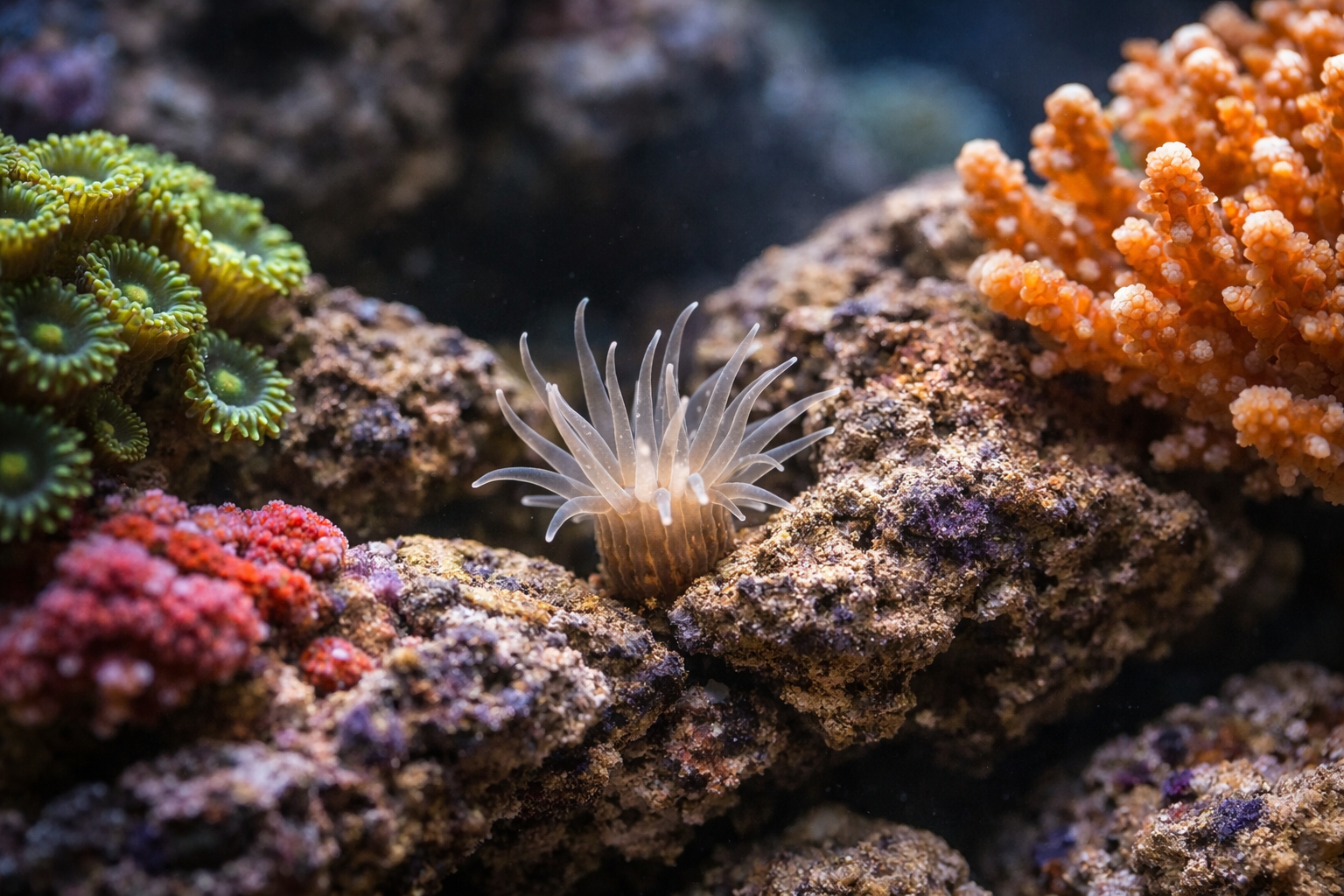
It commonly appears as a small translucent or tan anemone with a narrow stalk and tentacles extending outward from a central oral disk. When disturbed, it retracts quickly into the rock.
Early warning signs include:
- Small anemone-like growth on live rock or frag plugs
- Rapid retraction when approached
- New translucent pests appearing near recently added corals
- Repeated reappearance in the same part of the tank
Beginners may mistake it for a harmless hitchhiker or a tiny decorative anemone. Experienced reef keepers usually know that if it looks like Aiptasia, it is worth treating like Aiptasia until proven otherwise.
Why Beginners and Experienced Reef Keepers Both Need a Strategy
Aiptasia is one of those reef problems that affects every level of hobbyist, just in different ways.
For beginners, it can be discouraging because it often appears just as the tank starts looking established. After the effort of choosing corals, dialing in parameters, and building a healthy reef, discovering a fast-spreading pest can feel like a major setback.
For experienced aquarists, the frustration is different. They know exactly what Aiptasia is capable of. They know that one missed hitchhiker can become a long-term nuisance if not addressed properly.
What both groups have in common is this: the sooner you respond, the easier the battle usually is.
The Two Main Paths to Aiptasia Relief
While there is no single perfect answer for every tank, most successful Aiptasia control falls into two main categories.
1. Livestock Relief
Some reef-safe livestock naturally preys on Aiptasia and can help reduce or eliminate it over time. For many reef keepers, this is one of the most natural and appealing solutions.
Depending on the tank and setup, livestock-based Aiptasia relief can be an effective long-term strategy, especially when combined with close observation.
2. Product Relief
Targeted Aiptasia treatment products allow hobbyists to directly address visible pest anemones. These solutions are often used when faster action is needed, especially if Aiptasia is growing close to valuable corals or spreading in multiple visible areas.
For many reef keepers, product-based relief becomes the go-to method for quick intervention while broader prevention measures stay in place.
When Aiptasia Becomes More Than a Small Problem
It is easy to underestimate Aiptasia in the beginning. One or two visible pests may not seem like a crisis. But once it begins spreading through rockwork, frag plugs, and hidden crevices, the workload increases fast.
You are no longer dealing with one target. You are dealing with:
- Visible Aiptasia near corals
- Hidden Aiptasia behind the aquascape
- Possible new hitchhikers on future additions
- The need for repeated follow-up
That is why the best time to act is not when the infestation is severe. The best time to act is when the first warning signs appear.
What Reef Keepers Should Focus on First
If you have noticed Aiptasia in your reef tank, the first priority is not panic. It is accuracy.
Start by confirming what you are seeing. Then assess:
- How many are visible
- Where they are located
- Whether they are near corals
- Whether the issue appears isolated or already spreading
That quick assessment helps determine whether livestock relief, direct treatment products, or a layered strategy makes the most sense.
The good news is that reef keepers today have better Aiptasia relief options than ever before. The key is choosing the right approach before the infestation becomes harder to manage.
Final Thoughts
Aiptasia is one of the most common and most frustrating pests in reef aquariums for a reason. It survives well, spreads easily, and often punishes poor removal attempts by coming back in greater numbers.
But it is not unbeatable.
With early identification, the right response, and a smart long-term plan, reef keepers can absolutely regain control. Whether you are new to saltwater or managing an established reef, understanding how Aiptasia behaves is the foundation of effective treatment and prevention.
In Part 2 of this series, we will take a closer look at one of the most natural approaches to Aiptasia relief: livestock solutions. We will break down how reef keepers use proven natural predators, when they work best, and what to know before adding them to your system.


